A Crucial Season Ahead For Irish Rugby

Schmidt’s first season in charge (Pic: irishrugby.ie)
When it comes to Irish rugby all seasons are important, some are more important than others, and this is more important than most.
New Irish head coach Joe Schmidt will be looking to put his stamp on his team in the forthcoming November series. His Leinster sides played some outstanding attacking rugby which  the national side often lacked under Declan Kidney. The players are certainly there for Schmidt to usher Ireland into an exciting new era, with the likes of Madigan, Zebo and Gilroy providing stern competition for the elder statesmen of the national set-up.
The November series will be a baptism of fire for Schmidt however, with a game against Samoa followed by clashes with Australia and his native New Zealand. Ireland had the upper hand the last time they met the Wallabies back at the world cup 2 years ago, but while Australia lost the Lions series and made a poor start to this year’s Rugby Championship, they have an enviable list of attacking talent at their disposal.
Enviable to all except perhaps the World Cup holders themselves. The less said about Ireland’s last clash with the New Zealand the better, however Schmidt will hope that his charges can at the very least acquit themselves well when the All Blacks come to town on November 24th.
Brace yourselves… They’re coming.
Then comes next year’s Six Nations and the opportunity and necessity of consigning this year’s poor performances in the competition to history. Finishing in 5th place, below both Italy and Scotland is not something that Schmidt would countenance in his first season in charge. However the fact that both those sides finished ahead of Declan Kidney’s charges last spring highlights the fact there is no such thing as an easy game in the Six Nations. Schmidt’s squad must hit the ground running in their first two games (at home to Scotland and Wales) if they are to avoid a similarly underwhelming campaign.
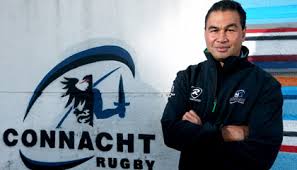
If the national side is facing a year of transition, it perhaps pales in comparison to the changes at provincial level. Former Blues coach Pat Lam is challenged with taking Connacht forward following Eric Elwood’s resignation. The western province have enjoyed some great Heineken Cup nights in the Sportsgrounds on Elwood’s watch, and Lam’s task will be to ensure better showings in the bread and butter competition that is the Rabo Pro 12. Last year they finished a disappointing eighth, 12 points behind Treviso. Losing the influential Mike McCarthy to Leinster is a setback they must quickly overcome.
Connacht Head Coach Pat Lam
Looking eastwards, Leinster have to adjust to their own changes in personnel. With Schmidt leaving the set-up to take charge of the national side, it’s former Leicester Tigers head honcho Matt O’Connor who picks up the mantle. The Australian had a good record with the Tigers in the Premiership, guiding them to back to back titles. However he now faces the task of further filling the Leinster trophy cabinet. Without Jonny Sexton and with Brian O’Driscoll entering the final year of a glittering career. If Leinster are to hold on to other key players then O’Connor must hope the IRFU figure out a way to compete with the vast amounts of money on offer from French clubs.  Lions tourists Sean O’Brien and Jamie Heaslip are the latest figures to be linked with a move away, with Clermont Auvergne reportedly interested in poaching the  back-rows once their contracts end next June.
Gone. Going? Going. (Pic: irishrugby.ie)
They knew the day was coming in Munster but it still hurt to say goodbye when Ronan O’Gara departed for Paris and a coaching role at Racing Metro. While the return of Paul O’Connell to full fitness after a frustratingly long spell on the sidelines last season will be a welcome boost, the question facing Rob Penney’s side is where the next group of leaders will come from. Peter O’Mahony has been given a vote of confidence in that regard, with the back-row taking over the captaincy for the season. However with O’Gara gone and Doug Howlett too, the issue is who will emerge as a leader in the back-line. It’s a big year for Ian Keatley and JJ Hanrahan as they battle it out to become O’Gara’s undisputed successor.
Ulster are perhaps the most settled of the Irish provinces, with coach Mark Anscombe in the job a year at this stage and little movement in or out during the summer. However even the most stable of Irish provinces will be thrown into chaos in the coming weeks. It appears that as of next season the Heineken Cup will cease to exist.
English and French clubs have both released statements in the past few days indicating an unwillingness to continue competing in the Heineken Cups in its current format. The present agreement for Europe’s premier competition ends after next year’s final. The French and English propose the establishment of a new 20 team tournament where qualification is gained solely on merit. They have stated that this new tournament will include teams from both countries but will also welcome sides from the other nations.
At present each country’s union has discretion in how to award the 24 allotted Heineken Cup places. France and England have six slots each, Ireland and Wales three and the Scots and Italy taking up the rear with two apiece. The winners of the competition and the Amlin Cup are also allocated a place in the top competition the following season.
Is the Heineken Cup coming to an end? 
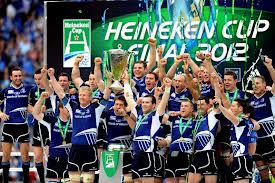
These regulations have allowed Ireland to send all four provinces into Heineken Cup battle in the past two seasons  and again this season, as Leinster’s two Heineken Cup successes and their Amlin win back in May this year have allowed Connacht to dine at the top table. Undoubtedly this has been fantastic for Irish rugby as a whole and anything that will alter the current arrangement should be treated with caution.

The ERC have countered the statements of the English and French clubs by reiterating that they must approve any European competitions, and stating that all parties are working towards a deal to extend the agreement that ends in May next year. However if the Anglo-French demands are not met and the Heineken Cup ceases to exist, it is imperative that the IRFU choose their side carefully. The provinces cannot survive on the Rabo Pro 12 alone, and anything that hurts them hurts the national team too. 

Like We Never Left (First Published in The Irish Times 18th Dec 2012)

On the 28th of December, a group of young Irish will meet in a Limerick bar a stone’s throw from the University from which they graduated in August 2011.
 This will be no chance encounter. A Facebook invite has taken the place of the Star of Bethlehem in this modern Christmas tale. We’ll come from near and far. Dublin and Edinburgh, London and Korea, even Clare.
 It will be more than a meeting of old friends, however. It will be one in the eye of the recession that for 364 days of the year keeps us apart.
In small groups we’ll arrive, seeking familiar faces in the crowded bar. The joy of reunion will be displayed in all its forms. Tears, laughter, hugs and pats on the back. We’re home.
 The warm glow felt after the first few pints will prompt the storytelling. Ten stories will be told at once, many which have already been told via Skype or Facebook, all of which mean more when told face-to-face.
At no point during the night will we forget friends half the world away. Friends who are spending their Christmas in the Far East, on Australian beaches, in Canadian cities. Our sorrow at their absence will ensure we are as aware of them as we would be were they there with us.
I’ll sit there smiling among my friends and inwardly I’ll wonder. What does 2013 have in store? Will I spend next Christmas half a world away from the homestead, or will I be one of the lucky ones in gainful employment within the confines of these shores?
I’ll shrug away these questions as I shrug on my jacket. There is a far more pressing matter at hand. Which bar next?
The night will hurtle toward its inevitable conclusion, and as closing time approaches it will be as though the last 16 months never happened. None of us have joined the rat race, the dole queue, or the masses leaving this country in search of a better life.

Morning will bring with it cold reality and hot tea. Friends will slip away from the hotel one by one. No goodbyes.. There is more promise in “see you later.” We can’t predict how 2013 will pan out, but we’ll content ourselves with the knowledge that we’ve ended 2012 in good company.

A Nou Perspective on Celtic after heroic failure

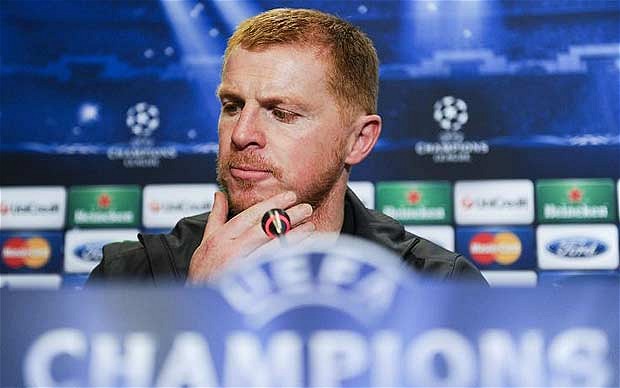
Plenty to ponder for Neil Lennon after tonight’s game

When the final whistle blew in the outer reaches of Barcelona tonight, Messi et al could be forgiven for looking surprised.

Not because they had eked out a late victory over Celtic, they’ve won enough games at the death for that to be a non-issue. But if they were expecting a clamour for their jerseys from Neil Lennon’s charges they were sorely mistaken.
It’s not as if there won’t be another opportunity for the sides to swap shirts, they meet again in a fortnight’s time when Celtic entertain the Catalans at Celtic Park. But you get the feeling that the Scottish champions have decided they aren’t in awe of their illustrious opponents anymore.
You hear it all the time. Visiting teams taking tours of the Camp Nou, starstruck players striking deals with the marquee players to secure their jerseys when the formalities of football are finished.
Not so Celtic, as this current crop of players are built in the mould of their manager. Neil Lennon never feared Barcelona as a player, and in the build-up to this game he was instilling that mindframe in his players.
Lennon looks upon these consecutive games as an opportunity for points on the board, or at least points proven. 
For almost 94 minutes tonight it looked like both ambitions would be realised. Unfortunately, “almost” is the key word. Jordi Alba crept in at the back post to send Celtic home empty handed. The left-back cost Barcelona €15m during the summer. Neil Lennon’s squad is likely to have cost less.
But what value can you place on heart? In truth, nothing, unless you add tactical nous and a bit of luck. Celtic’s ploy of playing the full-backs close to the two centre halves prevented Barcelona’s attackers from darting inside on one of those all-too-familiar and utterly devastating runs.
Granted, luck played a part in keeping Celtic in the game until the final foray forward by Tito Vilanova’s side. Minutes earlier, sub David Villa had struck the base of Fraser Forster’s post. The big keeper too had a major part in keeping his side in the game, saving twice from Messi in the second half. 
A momentary lapse by James Forrest in the last 15 seconds was all that cost Celtic an historic point. To blame the youngster for the defeat would be unfair however. Countless experienced defenders can empathise with the winger this evening.
A glum journey home to Glasgow then, but Lennon and his side can take heart in their overall defensive performance. Along with the victory against Spartak Moscow a few weeks back, this game may go some way towards convincing the footballing world to sit up and take note of Celtic. A 2-1 defeat to Barcelona on their own turf is nothing to be ashamed of. Xavi and his feted teammates will find an atmosphere like no other when they arrive on the outskirts of Glasgow in two weeks time. Celtic Park will be rocking. No bookie will be brave enough have Celtic at 45-1 to win this time around.

Irish fans deserve better

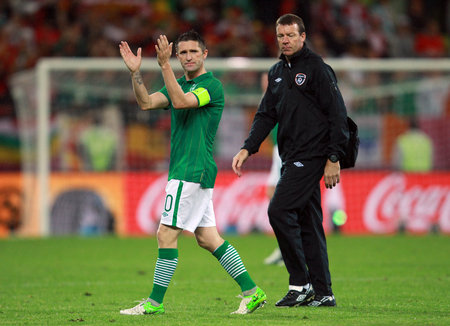
Robbie Keane applauds the best fans in the world ©INPHO/Donall Farmer   

Let’s face it. Roy Keane doesn’t make life easy for himself. He says he’s over Saipan, then harks back to it. He sneers at punditry, then makes a nice little arse groove for himself in the studio chairs at ITV. Everytime he opens his mouth, quills are sharpened and broadcasters clear their throats.

But the ex-Ireland captain should not be criticised for what he said following Ireland’s drubbing by Spain last Thursday night. Keane gave a withering assessment of the Irish performance, and said that these tournaments should not just be a sing song for fans.

This was immediately taken as “Keane takes a pop at fans”.

He didn’t. He just thinks they deserve better. And he’s right.

There is no doubt that Irish fans are the best in the world. Our sporting teams are never under-represented in the terraces, no matter where on the globe they might be playing.

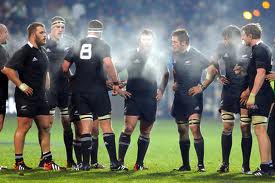
This morning (Irish time) in Christchurch Ireland came within a whisker of a momentous result against the All Blacks. For the majority of the game, Irish voices rang loudest around the 21000 seater AMI Stadium.
When captain Brian O’Driscoll muttered dejectedly through the post match on-field interview, Ireland fans cheered their approval of Ireland’s performance.

Plucky, but ultimately (as O’Driscoll pointed out) ending in failure.

Fans cheering as Ireland lose. Twice in less than 48 hours have our flagship teams lost to World Champions. Twice Irish fans back their team despite the bitter taste of defeat.

Celebrating failure.

This is not the fault of the fans. If anything it shows the supreme dedication of those who follow Irish sport. We demand heart from our teams, and anything else is a bonus.

But why should we be content with heart? Keane is right. The fans deserve more than a singsong and the honorary title of the best supporters in the world. The main reason they are being dubbed that in the first place is because the international media can’t understand just why the fans aren’t booing the soccer team.

Houghton 1988. O’Leary 1990. McGrath 1994. Robbie Keane 2002. All great memories. The abiding memory from Ireland’s Euro 2012 campaign? A fan sucking on a Croatian tit.

Irish fans have flocked in their droves to Poland to support the Boys In Green. Many will spend years paying off the loans they took out to get them there. And the team have given them nothing in return. The stalwarts of the team have made mistakes that they never make with the Irish shirt on their back. In two excruciating games they have given away horrendous goals just after the first and second halves have gotten under way. Lapses of concentration have let them down in a way that all the heart and desire in the world could not rectify.

Ireland’s fans sang the Fields of Athenry as their Euro 2012 dreams unravelled before them. Faultless support, and Roy Keane’s message was that they deserved more. The Italy game has now been reduced to a chance to restore some pride in the jersey.

We are a small nation. The high level of interest in sport sometimes ironically causes us problems as oour small population is divided between soccer, rugby and GAA. No one sport gets unrivalled attention in the way that rugby does in New Zealand or football in Spain. But that doesn’t mean we haven’t put it up to the biggest teams in the world on occasion. We should always strive for excellence, and not be content to sing in the pouring rain as another defeated Ireland team trudges off the field.

Here’s the crux of the matter. Irish teams know that no matter how they perform, the fans will stick by them. This is particularly the case with the football team, as the rugby team is at a level where they are expected to be competitive on the big stage.

If fans were more demanding, would it help to change the mentality that we are just in major tournaments for the singsong? Maybe.

Murray Kinsella wrote today about Ireland having the players in rugby to compete with the world’s best, and  that perhaps that’s not the case in football. He’s right. We don’t have nearly enough quality to cope with the likes of Spain. But neither did Greece in 2004. Neither did Switzerland in 2010 when they beat Spain in the World Cup.

Ireland need to be more than just cannon fodder for nations in big tournaments. They need to be in big tournaments more often. And they need to shed that “happy to be here” mentality that leads to every other country in the world running stories about plucky Paddies having the craic. There is no greater insult to our sporting pride than those stories.

Brian O’Driscoll and co will be absolutely gutted after the narrow loss this morning. It will be hard to pick themselves up after a performance of such high standards led to nothing but another defeat against the All Blacks.

But we expect them to pick themselves up. We expect them to give a good account of themselves and push New Zealand all the way next Saturday. We expect all this because this is a generation of Irish players that has given us so much, and proved that they can beat anyone on their day. Our expectations are high, and Kidney’s men deliver.

There’s a line from a Kanye West song; “Reach for the sky, if you fall you land on the clouds.” Aim high. Do not be content on getting to a tournament. Go out to win the damn thing.

 Expectation breeds success which in turn breeds expectation.

It’s a vicious circle, but it’s gold-tinted. Ask the All Blacks, ask the Spanish footballers. They are expected to perform every time they take to a pitch. The pressure is immense. But so is their record.

No team should ever be slaughtered for playing with heart and coming up short. But criticism – like Roy Keane’s – of poor performances should not be criticised. The fans deserve better than having to dine out on nostalgia.

Irishness? What the feck is that?

We don’t help ourselves in fairness.
 
St Patrick’s Day. A time for perpetuating the stereotypes. Begorrah, we’ll have a session to be sure. Ah it’s only a bit of craic all the same. Sure aren’t we all just fun-loving little leprechauns?
Maybe St Patrick’s Day then would be a good opportunity to take a good long look at ourselves? And not through the bottom of a pint glass.
Leaving aside the Paddyisms we put upon ourselves in order to sell aran jumpers and claddagh rings to Yanks, how do we define ourselves in this country? What makes a person Irish? What qualifies as “Irishness”?
We’ll start with the alcohol because, well, there might be a grain of truth in the perception that drink is an intrinsic part of our culture. Just a grain mind.
Meabh Tobin is a Limerick girl working in Dublin. She’s worked in Spain and Boston, and has seen first hand how the Irish are perceived. She doesn’t think we help ourselves to shed the stereotype of a country fond of a tipple. “The way we give directions… It’s always in relation to a bar! ‘Oh, you know this pub? Yeah well the place you’re looking for is right around the corner from there’” she laughs.
But surely our predilection for a pint isn’t the only thing that defines us? There’s a fair few on our lovely island who believe that our Irishness is defined by one thing; our non-Englishness. This is most apparent on weekends like this one. Ireland take on England in Twickenham on Saturday, St Patrick’s day. Beating the old enemy, on their home turf, on the day of our national holiday. Life couldn’t get much sweeter than that. 
 
The Grand Slam year. Look, and smile.
There’s no doubt that there’s far less animosity directed nowadays at “them across the water”, but there’s still a certain bitterness that manifests itself on sporting occasions. The joy of our nation when England is dumped out of yet another football tournament on penalties is akin to us winning the damn tournament ourselves.
Funny that, because on the whole we’re viewed as being quite a docile nation. Not a bitter bone in our four million bodies. The land of a thousand welcomes apparently. Possibly, but depends on who we’re welcoming. It’s a sign of the times that the Pope is loathe to visit this country, when 40 years ago Pope John Paul II received the type of adulation in the Phoenix Park that the recently defunct Beatles could only dream of.
Which brings us neatly onto religion. A dirty word nowadays, but the keystone to Eamon De Valera’s 1937 constitution. It’s thought that Bishop John Charles McQuaid helped Dev draft the document that would shape the young republic. Indeed, the Catholic Church’s “special position” was acknowledged in the constitution, “as the guardian of the Faith professed by the great majority of the citizens”.
Religion in Ireland. Needs a good kick up the…
 
The majority of the country would still profess to be Catholic, but this is in the same way that Jamie O’Hara professes to be Irish; bit embarrassing really, but nice to have to fall back on. We still see the residue of the well documented “Catholic guilt” present itself within our media. Sex scenes on our screens are still frowned upon, and that’s just the heterosexuals. Gay,or out of wedlock? Look out your window. Flames and pitchforks. The Irish and sexuality is a process much like that Iarnroid Eireann advertisement a few years back; “We’re not there yet, but we’re getting there.”
The attitude to sexuality that still remains may go some way to explaining why our idea of romance is so messed up. Not for us a picnic and a bottle of the finest red beneath the Eiffel Tower. That’s for ponces. Sorry ladies, the best Irish men can offer is a beery “shift” in a dingy back alley, where you can look forward to wondering fearfully whether it is part of your partner’s anatomy you’re groping or just the handle of one of the many adjacent dustbins.
 
Aren’t you a lovely cailín? Fancy a shift?
On a weekend where we celebrate both a Welsh hostage from yore and Mother’s Day, it is difficult to decipher who is the bigger saint. The Irish Mammy had it hard in the olden days. Fulfilling jobs only lasted as long as the woman wasn’t married or with child. Once either or both of these occurred, the woman was released before she could say “equal rights”. The country was full of embittered housewives, reminiscing on the glories of their past lives in the civil service. The kettle boiled, the baby wailed, but all the house-bound woman could hear was her own voice nagging at her that this wasn’t right, this wasn’t fair.
Job prospects aside, there is no one in Irish society with power comparable to the Irish mammy. While she may have had no choice but to remain in the house and rear the children, once they were reared most had an attachment to their mother that couldn’t have been greater if there was an umbilical cord involved.
“Jaysus. I won’t sit down for a week.”
The Mahon Tribunal has cost the taxpayer somewhere in the region of €300 million to date. That money could all have been poured into education if someone had the hindsight to stick Bertie Ahern into a room with his mother for five minutes. He would have emerged chastened, and most likely with his “arse reddened” for him. With a wooden spoon. Because that’s the Irish way.
 
So there you have it. A picture postcard of Ireland that you wouldn’t send your distant cousins in Minnesota. It may be as coherent as a bar fly at midnight on March 17th, but this is our nation and we’re the only ones allowed to criticise it. So let us all raise a glass, and toast the Ireland and the Irish Mammy. Eamon Dunphy called the emerald isle a dump not long ago, and he may be right. But by God, it’s our dump.

The Emigration Chronicles: A Personal Note.

It started with a class assignment. Told to do a feature piece on emigration, I did what any lazy journalism student would. I asked my my friends to help me out via Facebook. The response was overwhelming.

Upwards of twenty people got back to me to regale me with their experience of emigration thus far. There was an eclectic mix of stories. Some had prospered abroad, some found the going tough. Many have made themselves a home from home, and will find it hard to return to these shores. Some could not get on a homewards plane fast enough. I could not even begin to tell all of these stories, so I apologise for anyone who I have omitted from the chronicles.

It’s a sign of the times we live in that The Irish Times has an emigration blog which is afforded the same billing as their news and sports coverage on their website. Ireland is leaking its youth (and many older people) at a staggering rate. Rural GAA clubs are literally being decimated as their players leave in search for a better life abroad. I was lucky enough that the editor of Generation Emigration, the amazing Ciara Kenny, took one of my pieces for the blog. The rest of The Emigration Chronicles you will find posted below.

It is important for those abroad to realise that we at home have not forgotten you. While you may get homesick, we here get awaysick. You remain in our thoughts every single day and we toss wreaths at the feet of Mark Zuckerburg in reverence of the fact that we can maintain contact with you in a way unfathomable even a decade ago.

Family Photo. (L to R) Alan (me), Shane, Kevin (kneeling), our friend Kieran, Mike.

In August 2010, I moved in with Michael Considine, Shane Clifford and Kevin Bourke for our final year in the University of Limerick. Personally speaking, it was the best year of my life. Now, Kevin and myself reside in Galway undertaking masters degrees while Shane and Mike are half the world away in South Korea. This recession has made maintaining friendships that little bit harder, and has made me realise that the four years we all spent as a giant community or even family in and around Castletroy were that much more precious than we realised at the time.

Beneath The Irish Times article, some people have commented that the only reason many of Ireland’s young people leave is for life experience, not because they could not find a job here. That may be a fair point, but fails to take into account the undeniable fact that a chance to escape the nay-sayers and nihilism prevalent in this country is far too tempting for many. If you suffered from Seasonal Affected Disorder, wouldn’t you attempt to drag yourself to sunnier climes for the benefit of your health? In the same way, if you suffer from the recession blues, aren’t you well within your rights to spread your wings and escape?

In saying that, I have a deep and profound respect for people like Catriona Delaney. People who see it as their patriotic duty to remain within the confines of this island nation and see to it that it will be a country that emigrants will be happy and proud to return to. You can have nothing but admiration for those with the guts to see out these harsh times and drag Ireland out of these dark times.

As for me? It remains to be seen whether I’ll be among those who choose to escape, or among the resolute few who stay behind. The next few months will tell a lot. Either way, like all those I spoke to, I will never turn my back on my country. Like Ross and Rachel, myself and Ireland might take a break.

Thanks again to everyone who contributed. And for the love of god do yourself a favour and visit Cian and Suzi’s food blog! Our Quirky Kitchen. Your stomach will thank you.

The Emigration Chronicles: From Korea to Castletroy.

Shouts carry across the training field. Handpassing drills ongoing. The mandatory fella clad in a Kerry jersey. This could be any GAA pitch in Ireland. Except it’s not. It’s in Busan, South Korea.
Shane Clifford always wanted to travel after college. He’s no stranger to leaving these shores behind. After all, he spent six months in Ghana a few years back. One of the many reasons he chose South Korea was because he knew there were three GAA teams in the country. That gave him the chance to play football, a sport he has played for as long as he could remember at home in Renard, near Caherciveen.
Good call. He’s now chairman of Busan’s GAA team. Not bad for a lad of 22. He’s playing rugby now too, something he never took up back at home. He came up against Michael Considine in a rugby tournament on St Patrick’s Day. The lads lived together during the halcyon university days in Limerick. Mike’s teaching in Daegu now. The Clareman’s team won. They meet again in the GAA in a few weeks time. Shane does be thinking that revenge will be sweet.
It’s not all fun and games however, Shane has a job to do. He teaches English to Korean students. He’s not lacking in experience. Ghana was his first gig, then a summer seeing the sights of Italy while imparting his knowledge of the English language to the locals. Korea then is just another country in which to teach.
Shane in the Philippines. (Far right)
But it’s not just another country, according to Shane. “Culturally it is a fascinating country and it’s physically beautiful too,” he says. That’s what a lot of people say about Ireland too. Shane is keen to find a silver lining to the recession back home. “People are being forced to move out of their comfort zones and be a bit more adventurous. We were all fierce complacent during our childhoods in comparison to what our parents grew up with. This might knock some sense back into the silver spoon generation. But don’t get me wrong, people are under enormous strain and times are tough. I guess with what I’ve seen as recently as this year in the Philippines, I just find it hard to follow along with the ‘woe is us’ attitude,” says the Kerryman.
He mentions the Philippines, because he spent two weeks there just over a month ago. He’s been to Ghana, he’s seen poverty, but he hadn’t yet seen first hand the effect a natural disaster could have on communities. That all changed. He had planned on a two week “piss-up/sightseeing holiday”, but an opportunity to lend a helping hand arose. A few days before he flew out, he stumbled upon an NGO called All Hands Volunteers. They were working in a typhoon hit community in the southern province of Mindanao. Shane spent his first week working with them rebuilding houses, and says that the memories of the construction sites will remain with him long after those of the second week’s waterfalls and restaurants subside.
Shane doesn’t see a future for himself in Ireland in the short term. He’s thinking that five or six years down the line he might have reason to return. For now though, he doesn’t see the point in returning home to what is by all accounts a ghost town. Ireland’s loss is the world’s gain. Shane’s not done travelling yet. He’s just one more of what Michael Considine’s mother called the “lost generation”. http://www.irishtimes.com/blogs/generationemigration/2012/03/20/emigrant-friends-compare-lives-around-the-world-on-facebook/
 It would be churlish to say that our entire generation has upped sticks and left however. Fiona Hogan and Catriona Delaney are two who have so far avoided the temptation of emigration. They are both undertaking masters courses in the University of Limerick, and both know what it is like to see a sibling walk through the departure doors at an Irish airport and have no idea when they would see them again.
Fiona’s brother Eoin, who played gaelic football at senior level for Limerick, moved to New York five months ago in search of work. For a very close family, Eoin’s move was heartbreaking. While they have adjusted somewhat, Fiona admits that there are occasions when his absence is keenly felt. “Before Christmas, we had an important family remembrance and obviously he was not here for it. He had been there for me to share in grief for the event and a real support and I suppose I kind of collapsed without him this year. I mailed him and told him I missed him but that is nothing compared to the comfort that one of his hugs would have given me. Christmas was also difficult. It was the first Christmas ever that our family had not been together for. Even though we are old and the magic of Santa has long since past, we still wait for each other to go downstairs on Christmas morning to open our presents. The same magic was not in our house this year. Instead, my mother placed a picture of him at our dinner table and put a place setting out for him. She said it was only a joke but I could tell it was giving her comfort. Bigger occasions like that, we miss him more, but I know he is thriving abroad so I’m happy for him.”

Fiona (left) and Catriona (right)
Catriona’s sister Sarah returns home this summer after a year working in a hotel in Geneva. She’ll be glad to have her back. Contacting her by Facebook or Skype just isn’t the same. “I was especially close with my sister before she left and although the social media has made it easier to stay in contact it’s never quite the same. I miss being able to hug my sister and no amount of technology is ever going to be able to fix that.”

While the two girls have both been affected by emigration within their families, they differ in attitude when it comes to the question of whether they will follow suit. Fiona is adamant that she will soon leave these shores. “I have already begun to make plans to follow by brother to New York next January after I graduate. Most of my friends have already left the country,” she says. “I have been in full time education for eighteen years now, and I will refuse to finish and work a menial job. I want to do something with my life. I want a flourishing career and the research that I have done suggests that that is just not possible in Ireland. Eoin is maximizing his life chances in America. He is reaching his full potential professionally so that’s where I will go to do the same. I will not let eighteen years of hard work go to waste in the hands of the greedy and foolish Irish government,” concludes the Caherdavin native.

Catriona takes a different perspective. She wants to be one of those who stays and drags this country out of economic mire so those her own age who have emigrated have a homeland they would be proud of once more. “I’m a home-bird through and through. I’d rather spend the rest of my days working in a deli in a small town supermarket, making breakfast rolls for the local drunks, than ever have to leave this country. It’s part of who I am and I am equally part of it. What hope have the future generations of this country got if every single one of its current young, enthusiastic and intelligent scholars up and leave because of economic difficulties? I reckon stick around and see it out. Someone’s got to be here to pick up the pieces and get things back on track. Why not me?”

Ireland needs a few more Catriona Delaneys.

Canada to Christchurch: The Emigrant Chronicles.

It’s a long way to Ballymaloe, particularly if you detour via Vancouver. But the famous cookery school is Suzi Gubbins’ ultimate destination. Five months ago she crossed the Atlantic to Canada with her boyfriend Cian Hickey. Cian had wanted to move to Australia, Suzi to New York. Compromise is a key component of any good couple. They compromised. Vancouver population swelled by two.

Cian and Suzi in Canada.
Both had just graduated from the University of Limerick. “As much as I miss everybody, I would prefer to have a steady job and independence. Something that Ireland doesn’t guarantee right now,”says Suzi.
So they took the opportunity to combine work and travel. Their first jobs, like the first jobs of so many emigrants, were in coffee shops. Soon though, they found themselves in at ground level in a property firm (no pun intended). Five months after their initial move, they find themselves promoted, working in the same apartment complex in which they live. Life is good.
With work so close to home, Cian and Suzi have plenty of time to indulge in cooking. Ballymaloe may be someway down the line, but practise makes perfect. They’ve even started their own food blog, Our Quirky Kitchen, with which they share their own recipes with a growing number of followers. For two young Irish people recently out of college, their cooking repertoire is far more impressive than beans on toast.
“I’ve wanted to be a chef since I can remember, but it always seemed far too stressful for me. The food blog, that was both our idea, as we cook literally everyday. I try to make everything from scratch, I love challenging myself and developing new recipes. Cian is great to cook with, because he has a little more patience than I do, so when something doesn’t work out as I want, he miraculously can fix it. We’re a good team in the kitchen!”
It’s not all gravy in Canada though. When Suzi’s grandmother died not long ago, Suzi was far from Clonmel. Funerals are hard when you are present, but what’s worse is not being able to say goodbye in person. “I miss my family a lot, and with my grandmother’s death it makes it very difficult when you can’t get home for funerals and important things.”
Christmas last year was spend in chilly Vancouver, thousands of miles away from home. The next festive period will be different. “I can’t wait to go home for Christmas. Last Christmas was very hard because we were working and on our own. Our families are coming over this summer for two weeks so that has definitely eased the homesickness!”
The couple found another novel way to ease the homesickness. Hawaii. Knowing they wouldn’t be home for Christmas, they booked themselves a five day trip to Pacific paradise. It was a “beat the January blues trip,” according to Cian. “We were both pretty sad at not being able to go home for Christmas so that was what really kept us going to be honest,” he continues.
No sooner had they touched base in Hawaii, plans were being made for another excursion. Vegas. “The night we got back we were talking to our Irish friends who were all going and we were very easily convinced to book our own trip,” Cian admits. It was a fun two days. “The city gives you energy, it’s crazy!” says the Limerick native.
Until the planned summer visit, family is accessible via Skype, which Suzi admits she would be lost without. She and Cian plan on working hard, eating well, and enjoying life in Vancouver. The dream remains at the back of Suzi’s mind though. A place in Ballymaloe cookery school, and maybe her own cafe. If the menu is anything like the posts on Our Quirky Kitchen, people will be queuing around the corner to get in.
Back in Limerick, people are already queuing up to try Neill Foley’s cocktails. A former housemate of Cian, Neill made a name for himself last year with his Munster Rugby cocktail tribute. He’s not averse to a drink himself, and is a regular feature in the clubs on Shannon-side. However he went missing from the social scene for a few months at the end of last year. He had taken the plunge and emigrated to New Zealand.
“I felt this was my opportunity to go do something with my life. I had a well paid full time job [in the Locke Bar], but I felt if I didn’t get out now I never would. The World Cup had a major influence on us going to New Zealand. I suppose everyone in Ireland was heading off to Oz and Ireland had the best rugby team they’ve had in donkeys years so it all made sense,” says Neill, from the Corbally area of Limerick city.
Five months of mayhem followed. The Rugby World Cup taking place in New Zealand meant that Irish emigrants who had pitched up in Australia all converged en masse in Kiwi country. The country of the All Blacks was painted green for over a month.
Neill will carry the memories of the tournament with him to the grave. Along with the two lads he had emigrated with, Mark Tierney and Anthony Barry, he got a job working for a man who owned a motor home company. First day of work, the owner turns to the three Irish lads. “So how are you gentlemen getting to New Plymouth for the USA game?” He lent them a motor home. For free. They had found the perfect job.
They had been staying in a hostel for the first few weeks, but with the Australia-Ireland game on the horizon, the prices became extortionate. The lads were faced with the prospect of having nowhere to stay. Boss Mark Boberg to the rescue once more. “Nowhere to stay boys? Here’re the keys to the warehouse. Drive the motorhomes in and sleep in which ever one ye like.”
The lads were suitably ecstatic. “The guy had known us eight days and gave us the keys to his warehouse worth god knows how much. We all had showers and cracked open three bottles of Export Gold. We put them on the table with the keys of this million dollar business and took the best photograph of the whole trip” smiles Neill.
Kindness followed Neill around New Zealand. He had been collecting match programmes and ticket stubs as a surprise gift for his father who had recently retired. What happened after the Australia game will remain with him for a long time. “In the middle of Eden Park in the middle of Auckland in the middle of the Pacific ocean… The last peson you expect to meet is someone form Caherdavin [in Limerick City]. Nicest girl I have ever met. Told her what I was doing for my father. After the match the programme was soaked with tears [of joy], rain, and Heineken. It was no good. The girl leaned over me, put her programme in my hand and whispered into my ear; ‘My dad died ten years ago. I’m sure he’d appreciate this.’ That sums up the World Cup for me. It’s f***in great to be Irish.”

Neill with Irish rugby centre Gordon Darcy
At Christmas, Neill took a chance and went to Australia in search of other work. He hit it at a bad time. “I arrived when all the students were off and they were all looking for part time jobs too.” After a few weeks fruitless job searching, he cut his losses. He returned home.
He’s been welcomed back to The Locke Bar with open arms. After all, he makes a mean cocktail. He’s happy to be back. “It’s not all doom and gloom. I’ve noticed that so many people are trying to do positive things in this recession. For example, a guy I went to school with is organizing music festival in Clonlara. It’s called We:Session because, as he puts it, we are all in this together so we might as well do something positive.”
Positivity. A characteristic as potent as any cocktail Neill could devise, and one necessary to get this country back on track.
For more emigration stories, stay tuned. Or visit http://www.irishtimes.com/blogs/generationemigration/2012/03/20/emigrant-friends-compare-lives-around-the-world-on-facebook/


Follow Cian and Suzi’s incredible food blog Our Quirky Kitchen at http://ourquirkykitchen.wordpress.com/

Occupy Dame Street Camp Cleared.

Dismantled this morning.

Business men and shelf-stackers trudging to work down the Dame Street thoroughfare would be correct this morning in thinking there was something different about the place. Occupy Dame Street was no more. In its place was Coppupy.
Build it and they will come. The Gardai, that is. Actually, it’s more a case of build it, refuse to move for Paddy’s Day, and they will come. In their droves.
At that time in the wee hours where hundreds of students stagger bleary eyed into the chill outside Coppers, a large contingent of Gardai emerged from the darkness  and began dismantling the Occupy Dame Street camp.
What was a colourful scene yesterday, a kaleidoscope of colourful tents and characters, is no more. By 7am this morning the only colour to be seen was fluorescent yellow, as a multitude of Guards stood around in their standard issue jackets observing Dublin City Corporation workers powerhosing the plaza where the camp once stood.
Ten protestors were on site last night when the operation began. This morning, some of them remained huddled where the camp had stood, illuminated by the glow of street-lights reflecting off the globe-like monument above them. Until last October, that globe was the stand-out feature on the plaza. Since then, it has been demoted, its sole purpose being  to provide a pretty backdrop for those taking snaps of the Occupy movement.
Those present this morning were, as you might expect, a little cheesed off with what had just happened them. “It’s sad really that this has happened. They wanted to sweep under the carpet any vestige of resistance to what’s going on in Ireland for Paddy’s day so the cameras would not see that there is any form of sign to say that there is something terribly wrong in this country,” said one.
Though the camp is physically no more, don’t go writing the obituary of the Occupy Dame Street movement just yet. “We will still use the area of Dame Street as an area to organise from. We still have that right to free assembly,” was the defiant cry of one dislodged protestor.
A bike, a cardboard box, a backpack and a handful of dismayed protestors. That’s what Occupy Dame Street amounted to once Dublin Corporation’s army of workers had ceased sweeping and hosing. The tents weren’t the be all and end all however, this wasn’t Oxegen or Electric Picnic. “The Occupy Movement was never about camping,” one protestor said. He pointed out that Occupy Wall Street’s numbers swelled once that camp was dismantled.
It could be that we will see more than one big march this St Patrick’s Day…

Niall Quinn Full Interview

So Niall, we’ll get it out of the way first! The World Cup in 2002, and Saipan. Could you just go through it for me in your own words.
There was a World Cup there, I think people forgot that it was actually one of those brilliant things that happened, and it was an amazing tournament. It was the best world cup i’d been to. I’d been to Italy obviously in ’90 when it all started, ’94 even though I didn’t play I was in America, and the Japan World Cup and Korea, it was just wonderful, the way it was organised. Believe it or not, the facilities, once we got there, as opposed to the island of Saipan, we didn’t want to make marks on the turf, it was like Wimbledon’s tennis courts or something, when training, it was incredible. The people were so proud of their country and wanted to show off everything, thats what I brought home you know? Maybe I’m a selfish footballer, I know the rest of the world were going mad. In some respects we had to pretend we were all upset when we came back, we had to almost let on that we didn’t enjoy the tournament because everybody was cracking up at home, but for me it was the best tournament, when you weigh up all the different things. Obviously Saipan happened, and there’s no point in saying it didn’t happen. I got over it. I got over it very quickly you know? And I understand, as a media spectacle it dragged on and on and on and everybody had a theory and all the rest of it, but those who did stay, banded together, should have beaten spain, we know that. Thats the regret I have from the world cup, personally not taking a penalty when all the young lads were so keen and enthusiastic and I stood back when they all went “I want one, I want one”, and looking back really, there was a probably a time where the youthful exuberance… I should have pulled it back and said “no”, but I didn’t do that. So thats my regret for Japan, I don’t regret Saipan at all, would have been best if we didn’t have Saipan, but it’s not something I lost sleep over. I lost sleep over that Spain game, we should have won that night we were by far the better team.
Was it a relief to get onto the field after the media circus?
In some respects yeah, we went one nil down against Cameroon in the first game if my memory strikes me right and there was a feeling “we gotta do something here guys”, you know? The knives will be out for us, the media will have their stories nearly written by half time, and we got back into it and we should nearly have won the game, and that lifted confidence. And then, we started to believe a little bit more I guess, like all teams in a tournament, regardless of what happened in the run up. The Germany game was always going to be the crunch game for us, it was always going to be huge.
You got a knock on for Keane’s goal.
(Laughs) Yeah, I came on late, and got some game time, and Robbie scored a famous goal and suddenly we were back in kilter and we looked ok. We werent’ brilliant against the Saudi’s in the next game, I think it was the last game?
Yeah it was the last game of the group.
We thought it was going to be a formality, a case of turning up and playing football, but they gave us a big scare, certainly for the first half. Robbie scored a goal for us, and Gary Breen, and Damien got us a bit of a fortuitous one. There was a bit of anxiety in the air. But we got to the next stage, we got to the next phase, to play Spain. You’re starting to believe then. The Spanish game wasn’t working out for us either, like the Germany one. We started slow in all the games really. I got back on the pitch for the Spanish game, and I must say it was one of the favourite games I ever played in, other than the fact that the result in the end, you know, they were really, you could tell taht they were an emerging team, that the players they had were the very very best that the world has to offer and we were there matching them and our spirit was overcoming them for long periods of the game, and we just didn’t get the break, we didn’t get that penetrative push, that one more chance would have got us in extra time, especially when they were basically down to ten men because they’ve used all their subs. We huffed and puffed. The penalties themselves, obviously I spoke about regret there, but they weren’t too clever either, a couple of their lads took bad penalties, and even the winning penalty, the lad who went to Middlesborough, Mendiez or…
Mendieta
Mendiata yes, he hit it badly, straight down the middle. Shay had just put his foot to get it after having dived and it hit a bobble and just went over Shay’s foot if you ever look at it. The penalties were scrappy and obviously huge regrets. My last time ever to wear a green shirt, you know, that all struck me at the one time, because I hadn’t contemplated that beforehand, we’d have been going on to play the Koreans.
With the way it panned out, the tournament, do you think you would have had a good chance against the Koreans?
Well, you’d like to think, seeing as we were able to physically dominate Germany, and physically dominate Spain, you know, that the Koreans wouldn’t have troubled us in that aspect. Now whether they would have been too quick for us and whether they would have been too clever for us, because they had a great world cup as you know, would we have handled the home crowd… I don’t know, its an interesting one, I’d love to have had the crack at it and see! All in all though, we came back, we knew there was problems at home,  people were mystified by what had happened in Saipan. I think it was a little bit embarrassing that we were asked to go to the phoenix park, (laughs) I don’t think the people wanted to go there, nor the team. We didn’t think we were being asked to do it, but then we got to Dublin airport and we were told we had to. There were things like that, it was all a bit disjointed, whatever about reports… Not the Moriarty report that’s a tribunal! They had another thing anyways…
Genesis I think.
Oh Genesis that was the name of it yeah! Don’t know what all that was about. There was lots of people who felt they had to be doing and saying things, and you know, as I said to you at the start, I really enjoyed the tournament. Yeah it was a big thing, I understand the level that people, you know, the lengths and level of sort of… negativity and the lengths of disagreement with what had happened and all the rest of it. But you know, football is a selfish world and I loved every minute of it, after Saipan.
When ye came home, it was straight into the European Qualifiers.
Yeah, well I’d finished then. I was still living in England, I stayed working with Sunderland as a player/coach till October, and obviously I didn’t get to the early games. But I can remember Mick going to try and win a game, the one game I did get to, I’m thinking it may have been against the Swiss, I can’t quite remember who it was.
I think it was probably the Swiss game yeah.
Yeah I think it was the Swiss. Mick was level with ten minutes to go. I think he might have put a forward on him, he went for it, they broke away and got a goal, and you could tell the knives were out and Mick’s reign was going to come to an end shortly afterwards you know?
And was there extra pressure on McCarthy after Saipan?
I’d imagine there probably was because of  the mood, people still didn’t understand…  I think even if we won the World Cup a lot of people, half the country, wouldn’t have understood why Roy Keane didn’t play in the tournament. It was just one of those things you know, football throws stuff at you, you know. Everybody looks at footballers lives and sees the glamour, and its “Oh I’d love to be doing that aren’t you very lucky?” but there’s some really tough times, and that was one. When the media swing against you, its really really hard. When you’ve injuries its really really hard, you know there’s so many things that can sort of knock you out of kilter and footballers are there to be shot at and the manager probably more so than anybody, and Mick had to make way then, hint of inevitability once the thing turns you know, and when the natives are restless in any sort of sphere it makes life difficult and the FAI chose to terminate and I think they went with Brian then, if my memory serves me. And Brian inherited a team that should have been full of confidence having had a really good world cup. Youth was on their side, but Brian inherited a team that was kind of a little bit… had gone a little bit cautious and cagey because of you know, not having the momentum after the world cup, it had took a backwards step almost as Mick Left. And Brian worked hard on that, with a more cautious approach I think, and it just, he didn’t quite get there. He was close to a couple of tournaments, very nearly having been a mile out of the first one he took over, very nearly got us there, right in it until I think the last game, and similiarly then with the next tournament. And the FAI made a change, I understand. Agree, I don’t think I ever said I agreed with the decision but I understand why they made it. They wanted to spruce something else into life, you know, they were building a stadium, they wanted to make it… I also know, or I think I know, that they didn’t have the funds to do a Trappatoni or an international manager, and Steve ended up getting the job. By his own admission, now looking back, I dare say he would say it was too early. Thats easy to say now, but he had to grasp the opportunity, you know, he didn’t have a stable FAI, you know to do… It’s like any manager, even at a Premiership club, you need a strong board from the day you go in there, and the FAI were still a little bit, you know, in the headlights regarding Saipan, the Genesis report like you said, the fact that there was another tournament without qualifying, and they had to come up with a lot of money for the stadium, so it was a tricky time. I remember, at this stage I had obviously finished football, and I went to do the commentary for Sky on Steven’s first game. I think, if memory serves me well, it was against Sweden. And the lads were unbelievable, they ran to the line after every goal, and I thought, “Jeepers this fella has a chance now”, you know, these fellas might just come back to the form that they can… Then I think they played Chile a couple of months later, and the place was full. I think he played five at the back, played a very negative game and Chile beat us easily, and I think the cracks started then, you know, his honeymoon was over…
Was the criticism he shipped unfair?
Ah yeah, a lot of it was very unfair. Here’s a guy whose played over 100 games for his country, he’s given his first important job, and a hell of a job it was, and I suppose he wasn’t given much time by the media, and they went for it and, was it linked to Saipan, was it linked to… I don’t know why it was so sudden, that they didn’t give him a bit of time. I mean, very few people talk about this, and people from Stan’s point of view say, you know, I think they went one nil up, against Cyprus, and we stayed one-nil up for 85 minutes and the crowd booed because it was only one-nil. I think it was something like that, you know, a couple of years later, Trappatoni gets a one-all draw and they cheer him off, so its amazing what…
It’s media perception?
Its a lot of perception. You have to earn your stripes too, and again, it just didn’t happen for Stan. I think, to me then, at that point you would have worried about where the FAI were going to go. Everyone knew that the stadium was going to be a burden, because it came at the wrong time looking back, it seemed a great idea, but people couldn’t afford tickets anymore. Friendlies weren’t suddenly a source of income they were actually a struggle, I’d imagine, to break even, and so the FAI terminated again and went with Trap.
What was your reaction when he was appointed?
Well, I think it was a brave appointment. My reaction was, “I hope he gets the things we always had in my day, the importance of team spirit, the importance of going that extra yard for those around you. I knew obviously, tactically we were going to be a different team, to Jack Charlton’s team, and I accept that and I think that everybody has the right to do the tactics of their manager and I’d never question that, but I was just hopeful that he would be able to knit up all the players from the different eras… new ones coming in, and the old ones et cetera, and tie them all into his beliefs and get a team spirit going, and thats what I was looking at, and you have to say, the results he’s got…. It mightn’t be the prettiest and most direct of football, there might have been times when he could have gone for the jugular and won more games, because, you know, you’d be fussy as a fan when things start to go well (Laughs). All in, he’s done exceptionally well, and to bring us to a tournament, coming from the place where he took over the team… A lot of talk about, “Oh, he doesn’t have a great team to pick from”. I became a better player because of what I did with the international team. I wasn’t doing great at Arsenal. I’d go away with Ireland, come back and life would be great, so the international scene is important to develop players and to make them better players anyway. And I think that’s whats happened. He’s developed maybe a dozen players who are comfortable international players now who might have been expected to struggle because they’re not playing in the top four, top six teams in the Premiership, and he deserves great credit for that and we’ll all be truly behind him in the summer.
Do you think that winning games means more to the Irish fans than playing Barcelona type football, or is that even in question?
(Laughs) Well, its funny you know. Stoke play a particular type of football that their fans love because Stoke were in the doldrums for so long.  Jack Charlton played a type of football that the fans loved because we were in the doldrums for so long. If we have a good tournament we’ll get used to this, and from now on, the coaches up and down the country coaching kids teams will be doing it Trap’s way. I’d love to see that happen, I’d love to see us have a real successful tournament, I think it’s set up nicely for us, on the basis that we’re totally written off at this stage. I had a look at the bookies and the odds, what the experts are saying, it’s even probably a bigger write off than 88 or even 90 where we were meant to be also rans you know? So I think that kind of thing will suit us, we will be a surprise package I hope, for the others, not for us, because we all know our strengths. I think it would be a great boost for us if it started to go well, you know like, one rugby match, Ireland v Australia if you remember, in their world cup recently gone by, the whole country got such a lift from one game that wasn’t near the final. If we could just make a statement in one of these three games which gets us into the next round I think it would be fantastic to build on and thats probably when I’d start getting really jealous about not being out there at the tournament and having to had to give up football.
How do you think it will pan out? What kind of results would you predict?
I’d say they mightn’t admit it but I’d say the Italians are very scared. I think they know that its a real awkward one for them, and they know us well from our previous couple of meetings, and they’ll know they’re in for a hell of a game. I haven’t seen enough of Croatia to think that they’re miles better than us. There are people out there in the media who are saying they could be the surprise package, that they could be favourites, that they could do this, that or the other, that they’ve got all these wonderful players, but you know I think there’s a chance for us in that game. The Spanish game, we’d want an awful lot to go right for that game to go our way, but a frustrating draw we know would hurt them more than us!
Someone like Fernando Hierro pulling Niall Quinn’s shirt maybe?
(Laughs) Well I don’t think we’ll ever get a penalty like that again, the guy tried to take my shirt off from the bottom up which was funny. Who knows, we might get a break or two and hopefully Trappatoni gets his eleven that he wants all perfectly fit and firing, and we can do something in all three games.
Looking at the squad for the tournament, do you see it changing drastically, even at all, beforehand?
I suppose there are 15 or 16 that’ll definitely go, there are three or four others who probably deserve to go because of what they’ve done for the team already, but maybe, outside James McClean whose an obvious one to mention,  that may be doing enough to say we can’t go without him, and thats, you know, there’ll be people at our club… David Meyler, whose just getting going now, if he puts in a dozen good premiership games between now and the end, he could start to make a late run for it, but you know, there;s a load of Irish players doing great stuff now in England. You always, if you look at all the teams that have gone (to major tournaments), there’s always one or two that come from nowhere and become important in the tournament. It happened to us with Ireland. Jack I can remember, when he told Gary Waddock at the airport in Italy that he wasn’t part of the squad and that he could stay if he wanted, and brought in Alan McLoughlin. And none of us had even met Alan before and he was at the hotel waiting for us and we all felt really awkward but Alan played an important part, and of course, a year later, a couple of years later he got us to America with that goal at Windsor. So you know, Jack got that one right, as harsh as it was, and I wonder if Trappatoni will do something similar. Even in my time, in 1990, nobody had heard of Schillachi before the tournament and he became a legend. And the manager was widely criticised for picking him for that tournament and he turned out to be a hero. Didn’t do an awful lot afterwards mind you! The world cup has a habit of doing that. Paolo Rossi, years ago, his career looked finished, he got thrown in the squad, scored loads of goals and became a legend because of it, and there may be somebody who’s probably not a regular Irish starter now and that might open up for him.
I know you’re slightly biased, but the way James McClean is playing at the moment… If he keeps this form up, would it be a travesty if Trap didn’t pick him?
Well, what are we in now? We’re in February, so if he keeps it up over the rest of the season, if he does get a run in the team. One thing I think, and I know Trappatoni will look at this, his off the ball performance is phenomenal you know? The effort and resilience he shows in getting, in stopping players on his side becoming attacking options for the other team. I mean, he covers the work of two people at times. He can tackle, he never dives in and lets them slip by. He always holds them up and forces them back. Gets into position as quickly as he can, you know, he’s…. Everyday training has really brought him on, training six days a week has probably been a major difference from his time in Ireland and… it just shows you that there  are smashing players there, maybe in every county in Ireland, that if things fall right… The belief, the desire, that James has. The talent he has naturally, you see some of the balls he puts in to the box, his dribbles, his shots on goal…. He’s got a lot of talent and that desire level, and with the right kind of coaching, with a manager like Martin who believes in his and gets the best out of him, the sky’s the limit for him, and hopefully Trappatoni sees it the same way.
Sunderland are doing great at the moment actually.
(Laughs) Yeah we’re doing ok aren’t we?* Martin has got everybody energised, he’s got everybody infected with that energy.
He’s like a Duracell bunny on the touchline isn’t he?
He is yeah! He’s like that in the office as you know. If he’s going over to see the scouting department, he’ll run across, and of course, as a consequence, everybody around him starts running. And it’s amazing, everybody gets things done. Its… Off the pitch, on the pitch, its been a joy to behold, because… It’s not done through modern, scientific…. bullshit, for want of a better word. It’s done through pure passion, professionalism, desire levels, respect of the players abilities and I suppose creating almost a family of players who’ll stick together through thick and thin. And that doesn’t come in a bottle with a fancy name, you know? It’s just class, and it’s lovely to see it when its in full flow.
I read a statistic the other day actually, that if the Premier League had started the day O’Neill took charge, you’d be third in and in the Champion’s League spots by now.
We’d be top of the league actually, somebody said! Jesus its hard to believe… Well look, Sunderland has been a tough station, I knew it was tough when I went back, five and a half seasons ago. It was in a pretty low place, for every reason. Financially, emotionally, the place was drained. There was a losing mentality there. Roy Keane came in, never mentioned that actually, looking back on football… Roy Keane came in, did a magnificent job, lifted Sunderland out of the depths, and it’s been a struggle over time, to make more gains than that, and Martin has come along and we look set to have a really, really flourishing future ahead of us with him so…
Hopefully the end of the season will go well anyway.
Yeah!
Just going back to Irish football, to the international scene. The game in Paris (November 18th 2009) was seen as a watershed.
(Laughs) Yeah, unbelievable.
How do you think it rates in terms of the great Irish games, including the ones that you played in obviously?
Well, it was an heroic failure, and this time you can truly say it was heroic failure. We were by far the better team and we did get cheated. I suppose, the bitter and twisted bit of me would forever see that little snivelling French manager laughing at the media afterwards, when the media suggested would they replay the game, and the disrespect he held us as a team, and even as a nation, because we were all hurting so much. I was glad. It sounds terrible now because I don’t have that much bitterness in me, but I was so glad that France were awful for the tournament. Ireland would have brought so much more to the party had we been the ones lucky enough to go, so that would be something that when I think about that night comes to mind… But yeah you’re right, I should think about the performance, how good we were. On another night I think we would have won by two or three goals, had we had a bit more luck around goal. It was just tough to take. Look, we’re over it now, of course we are, but it came at a time when the world cup, going to a world cup, would have meant so much, not just to the FAI but to the whole country really. We were reeling off bad news politically, in the economy, all the rest of it, and we were cheated out of it, lets not forget that. But, well done Trappatoni, he gathered the lads back together, got them believing, kept them believing and here we have this tournament coming up now and its great, so hopefully we’ll do something really good in this one.
Talking to you about Croke Park or the Aviva might not be warranted, but the Lansdowne road era, you played in a fair few games there, to say the least. What are your memories of Lansdowne Road as a place to play in?
Well, remember, I went to secondary school, I was 12, I went to Drimnagh Castle. It was half days on wednedays, and Lansdowne had no floodlights so Ireland played all their games on a Wednesday afternoon. I can remember going down to Lansdowne, it was real early, you know, the likes of Paddy Mulligan was playing, Terry Mancini, just to throw a few names at you. Mick Kearns was the goalkeeper from Walsall. Seamus McDonagh, who is actually our goalkeeping coach, was also involved at the time. Davy Langan of course, he was a great hero of mine, and I ended up rooming with him six, maybe seven years later when I got in the team. They were the guys I remember. Liam Brady was obviously a great hero, Frank (Stapleton), Dave O’Leary, they were all… Mark Lawrenson. Gerry Daly, you know I can physically remember standing on Lansdowne watching all these players. Terry Conroy, you know… Great great players. Micky Walsh, you remember Micky, he was a really good player, from Blackpool originally, went out to play and settle in Portugal. Mick Robinson.
(Laughing) You’re throwing names at me!
(Laughs) They don’t mean anything to you? Well, they were the guys that I went to see. Don Givens at the tail end of his career, who was the international record goal scorer, and Frank, who was desperate to take it it off him. Thats what I remember first about Lansdowne, I also remember going to watch Liverpool, just after they won the European Cup. They brought the European Cup to Lansdowne and the crowd invaded the pitch with about five minutes to go so the match didn’t end. (Laughs) I was young when that happened. Then of course, suddenly you’re picked to play a game there. It was a great experience, obviously. I came on as sub, a few times before a debut there, and one of those games before my debut there was against Brazil. I came on as a sub against Brazil, me and a guy called Ken DeMange, who was playing for Hull City at the time. We came on as subs with about 20 minutes to go, couldn’t believe our luck that Jack asked us. Liam Brady scored an excellent goal that day, i don’t know if you have ever seen it. We were strolling around nightclubs that night saying “Hey girls I don’t know if you’ve seen it  but we beat Brazil today!” (Laughs) Great memories. They were in the real early days, I was still in the under-21s then. There’d be days you’d be called into the squad to sit on the bench. Didn’t get on that often, I think I got on against Luxembourg for Euro 88, and one other team I can’t remember. And it was really only… I suppose Lansdowne really only started becoming really meaningful for me after 1990, because by doing well at the tournament in 1990 I was the first choice striker, and really, until we played Holland… And I earned my stripes against Holland in the World Cup in 1990, and until we played Holland again in qualifying for 2002, which was 11 years later, any time I was fit, I played. I was first choice in that 11 year period, and thats when Lansdowne meant the most to me. I can remember flicking a really important goal against Denmark, against Schmeichel, we ended up getting a draw out of if. And of course, with what happened in the next game, if we hadn’t got that draw we wouldn’t have gone to America. So there was some big moments that happened for us in Lansdowne, and I think, to me, when the crowd… in that second half with fifteen minutes to go, they were capable of sucking the ball into the net. The emotion that used to be in the stadium in them days.  I think as it went on, and as we reached the later stages of my career, yes the suits started buying all the corporate seats, and there was something a little bit different about the crowd, it was, “well we’re celtic tiger now and we expect this”, and we had to work hard to get them going but it was never like that at the start. I’ll just point back to one example of that. Davy Langan would start a run down the side of the pitch, he wouldn’t even have the ball, and the crowd would roar. They would scream at whoever had the ball to play it to him, and he was a Trojan, he used to work so hard up and down. There were real genuine football people in them days, and here I am now on the other side of the fence, looking for international revenues for Sunderland. It’s my job, and I’m not giving out about commercialism in football, but when I started there it was a different story and they were great memories.
Was it in Lansdowne that you broke Frank Stapleton’s record?
I did yeah, I broke Franks’ record against Cyprus. Kevin Kilbane crossed a ball for me. I think it was the last game in qualifying… No I think it may have been a friendly before 2002,  I can’t remember. I know I equalled it out in New York, against South Africa, and luckily Mick gave me a few more chances to try and break it and I broke it. And at that point, I was starting to be used as a sub, I’d had cruciate injuries and stuff and I was happy just to get any game time just to help the squad along. When I went out to the 2002 world cup, a bit of me thought, is it selfish? Should a younger player be coming in? I had the conversation with Mick, and he said you never know, we might need you out there, I also need you to galvanise the troops, we all have to stick together. Little did we know, that that became far more important than we ever thought. Far more necessary I guess. What could have been a bad tournament, as I said, and what could have been people’s perception of “Oh God that was awful, terrible”, to a man I think everyone in the squad would say that once Saipan was out of the system, it was a memorable tournament for us all. We’re here now, this is the first one since… Great. I hope we have no issues with players beforehand. I can imagine all the prep… nobody will be worried about all the preparations, and we can go and surprise a few people.
Hopefully. The Carling Cup is, or was, the flagship tournament for the Aviva. You played in that tournament in Iceland… Small tournaments, but do they mean a lot to players, if you win it?
Well the small tournament in Iceland was the first tournament I think that Ireland had ever won as a nation. Iceland obviously were in it, and I think the Czech Republic, or Czechoslovakia as they were at the time. We were this merry band of lads who were delighted to be on the trip, had this new manager who, with the greatest respect hadn’t really enamoured himself by this time. He was dismissive of the media, he told Dave O’Leary who was a great favourite of the Irish fans that he wasn’t wanted anymore. He set about getting ego out of the dressing room and getting hard workers and grafters, and it was right at the beginning of that phase, so it wasn’t straight forward. He hadn’t won everybody over by that point. But he gave me my chance, so naturally I would have ran through a brick wall for him, and still would today. That’s the measure, the emphasis that he had on my career, and looking back on that time, I can remember team talks on that trip, I was rooming with Mick Robinson, he was a star at the time for Liverpool. He later went out to Spain and I think he’s a TV chat show host in Spain now, believe it or not.
As you do!
As you do. And that was the start for me, I was mixing with all these people I used to go and see, and we won the tournament, and had a great night out after the last game. The other thing I remember is, Miss World kicked the game off against Iceland. She’d just won Miss World, Miss Iceland had, and it was our kickoff and so I think it was Frank who I was playing up front with. They went back and she kicked off with me and I knocked the ball back, so coming where I had, playing minor hurling a year or two earlier, to kicking off an international match with Miss World, it was fantasy stuff!
You were like George Best.
Well not quite, I didn’t get her number! (Laughs)
The Carling Cup, it was looked at as… There’s still a bit of controversy over it, the Scottish FA are looking for some money or something but, do you think it should be an annual thing?
I don’t know really, as I said earlier friendlies have been mortally wounded, unless its a real glamour one you know? I remember Wembley went crazy there for a friendly because Ghana were in town. The Ghanaians brought huge colour and a huge crowd to the friendly in Wembley there the season just gone by. It’s a difficult one, because Trappatoni will want as many players possible for friendlies to make up the last little bits of his squad for the next important game, so that, there’s chances there. The crowd are saying, “Well ok, it’s only a friendly. Tickets are so expensive now that I’ll wait for the qualifier”, and the expense of putting one together, the FAI are looking at it saying… It’s just really awkward. They’re certainly not what they used to be. A friendly used to be the same as a qualifier when I started playing. You were wearing the shirt and that was all that counted. You wouldn’t let anybody beat you in that shirt. I can remember… I’m not surprised that they’ve diminished somewhat. I remember going down to Turner’s Cross for a friendly international. Before Ireland went to a major tournament, maybe 90 or 88. Jack, every time there was a break in play, Jack stopped and came out and had a team talk in the middle of the pitch, and ran off! (Laughs) You could hear all the crowd, this Cork crowd and they were going mental! And every time there was a free kick Jack would say “this should be a free kick for us, this is where we want to play from”, and the referee would point the other way! The crowd were going bananas down in Turner’s Cross, it was a really funny time. The Munster selection team were shaking their heads, saying “this is ridiculous, we’re being used as training guinea pigs here”. And it was billed as a proper match, so sure look, there were loads of stories like that. They were all great days, and I think we won in the end!
You played with a lot of players who would have qualified for Ireland under the granny rule, and there’s been a lot of controversy over the likes of James McCarthy and Aiden McGeady. James McCarthy moreso perhaps, because he hadn’t declared either way up until the Macedonia game last year. Do you think its a worthwhile policy of pursuing players under the granny rule?
Well, gosh, if I look back now on the team I played with. I mean, Chris Hughton was a great favourite, and was a brilliant team player for Ireland, and everyone took to him, and he took to us. Superb guy, great leader in the dressing room. Seamus McDonagh, before my time. Seamus… I remember, when I knew Seamus first, his dog was called Thurles, and he used to carry an Easter Lily on his jacket. Far more Irish then I ever was, you know, or anybody around us was. And trying to say that because his father had to leave because there was no work in the fifties and sixties… My father came home, and I played hurling. I was lucky, I feel lucky that that happened to me. But my eldest sister was born in England, and I have no doubt that we’d have been reared very Irish. Kevin Kilbane, for instance, his mother and father were from the west of Ireland. There’s possibly one or two who seem to have abused it and turned up when they liked. I think Robbie got upset about that one time, and that can be difficult. But in my time, when you look at the players who were born outside Ireland and played, even in the 1990 team. Dave O’Leary and Paul McGrath would fall in there, they were both born in the UK, even though they spend the majority of their youth here. I can honestly say that somebody who wants to play for Ireland because, not only have they got Irish background and have been brought up Irish, but they’re doing it to please family, to please their father, their mother. Mick McCarthy would always talk about his dad and the pride he gave his dad when he wore the green shirt. When you hear that coming within a dressing room, then there’s never going to be too much of a problem. Its the guy who comes in and goes, when the national anthem is on, “which one is that, is that ours?, which I’ve known! (Laughs) There’s stuff like that, but in the main I think that the manager will suss people like that out and suss whether they’ll be able to play a role or not.
Do you think it’s going to be a big lift to the country, Euro 2012?
Ah yeah I hope so. As I say, the rugby match (Ireland v Australia) proved that we’re desperate for some kind of international success to take our minds off the everyday economy here, and it got us going in 88 and 90…. The country felt good about itself, and please god we’ll do the same now.
Who’d be the most influential player in the last decade of Irish football, in your opinion?
You have to look at Robbie and what Robbie has done. To have a conversation about the last ten years and to not mention Robbie’s achievements would be really wrong. My finest bit of punditry- I don’t do punditry as a rule- but I used to, I did it for three years when I finished football… Coming off, after Robbie’s first goal, I think it was against Argentina, I might be wrong but it would have been around that time. I was stopped coming off the field at Lansdowne and asked about Robbie because he’d got his first goal, I think he was 17 at the time, and I’d spent the four days training with him. He was like a jack-in-the-box, he couldn’t sit still. Mick had to tell him to shut up when he was giving team talks and stop playing keepy-ups… I said to the reporter, it was live on TV at the time, and he said, Robbie, is he one for the future, could this kid one day break the scoring record – at the time it was Frank Stapleton’s record- and I said, “I think he could double it”. They were my very words. From what I saw, this kid could double this thing, and he could score 40. And I’m reliably told that it went back to studio and I was instantly dismissed as a total fool, and that I shouldn’t be saying stupid things like that. Not only did he get 4o, but he’s on his way to trebling it! I always look back, I mightn’t have been the greatest pundit that ever lived, but I got that one right.
Standout game of the last ten years?
Well, when you quit, a lot of emotion goes through you. You look at the first few games and think “Could I have played? Could I have made a difference? Did I quit too early?”, and obviously there were hard times like that, but I suppose, for negative reasons the France game stands out, of course it does. But I tell ya, I really enjoyed the Italian game, the draw in Croke Park. We were full of that old enthusiasm, the whole “you’d get there no matter how” thing. There were some great goals scored that night. Unfortunately we got too carried away with having scored, with the excitement. Because it was a young team, in general, and the Italians came away and got an equaliser, but, to me, I felt that last roar, just before we got the second goal, I felt that this was what it was all about, and this is what I remember the most, so for getting a feeling of a surge of pride and a surge of, you know, “Yeah, that’s us”, that game was probably the closest to when we were in our heyday.
Looking forward now instead of backwards, is there a bright future in Irish football? Who would be the players you look forward to seeing in the next five or six years?
Well, you’d have to look at James (McClean). You’d have to hope that Dunnie (Richard Dunne), Duff, or Robbie, the guys who were around in the u-18 team all those years ago, that they’ll last as long as they can. But in return, as they’ll exit, I do think the future’s bright, I do think that one or two can come from nowhere. I’d love Trappatoni to go and look at Wes Hoolahan. He was the standout player for Norwich the other night against us (Sunderland), even though they didn’t play particularly well. Excellent again at the weekend, I think he has a future. Long, Shane Long, I think he’s ready. I know it slowed down for him a bit in recent weeks, but up to that point he was doing very well, and I’d be very comfortable with him. Kevin Doyle, he got his goal at the weekend, and he’s going to be around for a very long time. He’s a player who, I regret that… We were very interested in him at Sunderland at one time and we didn’t push the button, and I’ve come to regret that on many occasions. I think he’ll be fine. I think this tournament will tell us a lot, and will create maybe two or three new stars for Irish football. It’s hard to pinpoint one, but obviously my hope is that McClean makes it, and he’ll have a great tournament, and he’ll come back to Sunderland worth twice as much as before he went!
(Laughs) Ye won’t sell him though!?
(Laughs) No probably not, but you know, he would be the one, if I was getting personal about it all. And I’d like to see the three lads, I don’t know how many tournaments are left for Damian and the boys, and Robbie and Dunnie. I’d like to see them having a brilliant tournament. I’m not trying to retire them off or anything, but I’d like to see them lead the way they have done.
Trappatoni won’t last forever. Who do you see in line as a future Irish manager? Would you put yourself in the mix?
No definitely not, no. That’s an interesting one. He’s still in there so it’s hard to do, you know? I suppose, with sort of Irish links, Brendan Rodgers might be someone who’ll come into the frame in the future. There’s some nice things happening out there, and it’s not about what people are doing now, it’s whenever Trappatoni has decided he’s had enough I guess, and we could have a brilliant tournament and he could stay on for four years, who knows? He doesn’t look like he’s slowing down any, so we won’t just retire him off yet! We’ll see how it goes. He’ll have brought respectability, a whole new respectability, to Irish football, and I think when he does go, it’ll be a more attractive job then perhaps it had been in the past, as the FAI search for replacements, you know, Mick, Brian, and eventually they got Trappatoni. Surprising he came at the time, but he did, and we might be in a better place to attract managers and what-have-you, as time goes on.
* This interview was conducted before Niall Quinn parted ways with Sunderland to spend more time with family and to concentrate on his company, Q-Sat.