Jury still out on UEFA’s Nations League

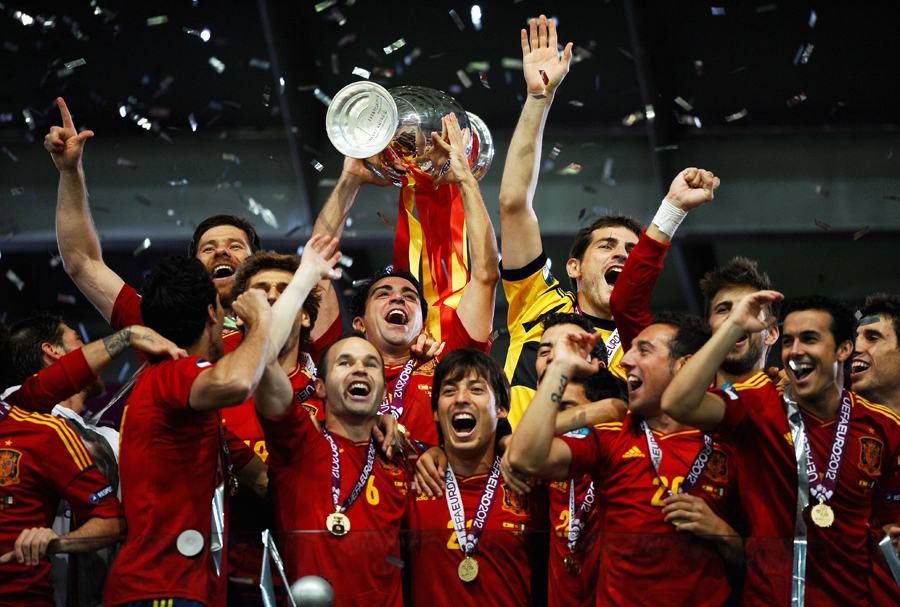
Spain v Italy - UEFA EURO 2012 Final

Spain, winners of a 16 team Euro 2012

In the future, international friendlies will be a thing of the past. The 54 members of UEFA this morning unanimously ratified the proposed Nations League, which will come into effect from 2018 onwards.

The aim of the competition, according to UEFA’s website, will be “to improve the quality and standard of international football.” UEFA admits in its statement that the exact format of the Nations League is yet to be determined, but “the concept is for the 54 teams to be divided into four large groups according to co-efficient rankings.”

When news of this possible development broke earlier in the week, it was easy to dismiss it as a PR move to make international friendlies more appealing. However it has emerged that the Nations League will be linked to the Euro Qualifiers, with extra places in the European Championships at stake.

In some respects this is a welcome move. Weaker countries will get extra opportunities to qualify for the European Championships. Anything that adds some spice to international friendlies can only be good for supporters, particularly Irish ones. If it wasn’t for the appointment of Martin O’Neill and Roy Keane last autumn, the Aviva Stadium would have been harder to fill for games against Latvia and Poland.

However is there really a need to throw another competition into the mix? The Nations League runs the risk of becoming the Europa League of international football; important to the smaller sides but treated with contempt by the top teams. Furthermore, if it is important to the weaker nations, does that allow less room for them to blood new talent? International friendlies, while often tedious, have always been the stepping stone for younger players between club football and the higher intensity of competitive international fixtures. If the Nations League threatens teams with relegation should they lose, will they be reluctant to field inexperienced players?

In any case, with the expansion of the European Championships to 24 teams taking place, surely the current qualification route would have been enough of an opportunity for the weaker teams to stake their claim. Traditionally the group stages of the Euros have been more exciting than those in the World Cup due to fact that there were only 16 teams of a decent quality involved. Raising the quota to 24 teams has already given the third-best side in a qualification group the opportunity to progress to the flagship tournament via the play-offs.

UEFA run the risk of not only diluting the quality of the championship itself but also of the qualifiers. If a team is doing well in the Nations League, will they focus more on achieving their qualifying objective in that manner than in the qualifiers?

These are all questions which cannot be definitively answered until the inaugural Nations League in 2018. The tournament could be a success, or it could be just another ridiculous idea like those linesmen behind the goals who don’t actually do anything.

 

Can Ireland make it to Euro 2016?

Ireland have been handed a difficult but not impossible task after being drawn in Qualification Group D for Euro 2016.
With Germany top seeds in the group, Ireland have to face Joachim Loew’s side for the second qualification campaign in a row. Ranked second in the world, the Germans inflicted a 9-1 aggregate defeat on the Boys in Green on their march to Brazil 2014.
Theoretically fighting with Ireland for the remaining automatic qualification spot and play-off place are Scotland and Poland.
Propping up the table, (barring disaster for the teams mentioned above) should be Georgia and Gibraltar. Gibraltar only attained international status in May of last year. Georgia, in its 20 years of playing competitive international football, has finished 6th in qualification groups more often than not. Ireland put four past them last June in an Aviva friendly.
With the talent at Jogi Loew’s disposal, it is difficult to see how Germany could drop points, let alone fail to finish top of the group. A team with a mix of youth and experience, and a spine consisting of players from Bayern Munich’s treble winning side and Borussia Dortmund, should take this group at a canter. It is difficult to select the key player for the Germans, because as soon as the focus shifts to one Wunderkind another one overtakes him.

Bayern Munich star Toni Kroos

Mercurial talents such as Marco Reus and Mezut Ozil offer potency in attack, while a midfield consisting of Toni Kroos, Mario Gotze Sami Khedira and Phillip Lahm (if played there) won’t be overrun too often. At the back, Mats Hummels is an extremely intelligent centre-half alongside a resurgent Per Mertesacker. If they have shown any weakness in the recent past  it was when they switched off at 4-0 up against Sweden in the last qualification campaign and ended up shipping 4 goals and two points in the process. While there is a possibility of them scoring four against Ireland, Scotland or Poland, it is unlikely they will capitulate and concede four again.
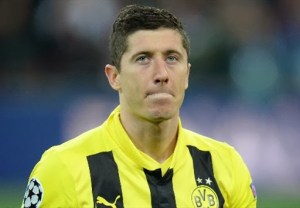
Of the teams challenging for second and third in the group, on paper Poland would seem to have the advantage. Their star striker Robert Lewandowski plays Champions League football with Borussia Dortmund and will move to the all-conquering Bayern Munich in the summer. Polish captain Jacub Blaszczykowski  also plies his trade at Dortmund. However Poland have never beaten Germany in 17 attempts. Most recently they played out a two-all draw in September 2011. Outside of their Champions League stars, their line-up is solid if not spectacular. They finished 4th in the qualifying campaign for this year’s World Cup after a promising start.

Lewandowski struggles to spell his captain’s name

Scotland under Gordon Strachan are slowly growing in confidence. Early losses during his reign put paid to any qualification hopes for Brazil, but wins in the meantime against Croatia and Macedonia indicate the former Celtic manager has bedded in well. The clashes against another former Celtic boss in Martin O’Neill will go a long way to determine the final positions of both Ireland and Scotland in the table. You can bet either O’Neill or his assistant Roy Keane will watch and rewatch the video of Scotland’s friendly trip to Poland next Wednesday.
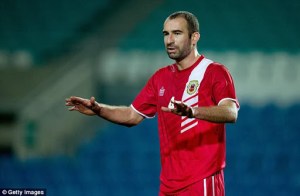
And what of the dark horsemeat of the group, Gibraltar? They have a fairly decent record having drawn with Slovakia in their first ever UEFA recognised game last November. It ended nil-all so it’s difficult to make out where their goals will come from as yet. Maybe former Derby County, Sunderland and Stoke central defender Danny Higginbotham? Though he has said he will retire soon so may not even be in the squad come the beginning of the qualifying campaign. Like all teams who Ireland play, they should be treated respect (Cyprus and San Marino spring to mind), but 6 points are an absolute necessity for O’Neill’s men.

Danny Higginbotham. Gibraltar’s danger man?

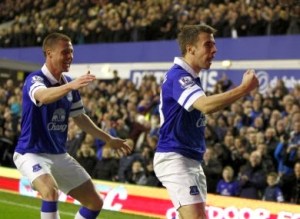
And what of Ireland themselves? Can we compete with Poland and Scotland? Irish fans would hope so, while Roy Keane would probably question why we can’t take six points off of Germany as well. This attitude is sure to serve the Boys in Green better than Trappatoni’s thinking that our team wasn’t good enough to play football against the big boys. With four potential Irish starters at a well managed Everton under Roberto Martinez, the hope is that there is a strong core in the immediate and long-term future of the Ireland team. The question of where Ireland’s goals will come from is pertinent, but hopefully Paul Green will chip in with a few.

Coleman and McCarthy will be crucial to Ireland’s chances

Ireland finish the qualifying campaign with games at home to Germany and away to Poland. Whatever about the Germany game, the Poland tie could be crucial in deciding the fate of both teams involved and Scotland. It’s the same day Ireland take on France in the Rugby World Cup. Some days Ireland’s sports stars take on the world and win. 21st of March 2009. Ireland beat Wales in Cardiff to claim their first Grand Slam since 1948. Later that night in the O2 Arena, Bernard Dunne knocks Ricardo Cordoba out in the 11th round to claim the WBA Super-Bantamweight world championship. A glorious day. All of Ireland rejoiced. Perhaps the 11th of October 2015 will be such a day.

Don’t Go Booking Return Flights From Poland Just Yet….

How nice of UEFA. Every team gets a cheery “good luck” in their native language, except for Ireland. UEFA General Secretary Infantini forgets at first, and then when he remembers, all he’s learnt is “Fáilte”. We don’t get good luck, we get “Welcome”. Be happy to be here, intrepid Irish footballers, luck won’t get you much further. Back to the Gaeltacht with you Mr Infantini.

Go n-eiri… Go n-eiri… Ah feck it (Pic:telegraph.com)

Spain, Italy, Ireland and Croatia in Group C. Not quite the Group of Debt, and perhaps most importantly, not quite the Group of Death either. That dubious honour goes to Group B, where Netherlands, Germany, Portugal and Denmark square off.
So what of Ireland’s chances? Once you’ve picked yourself  off the floor, think rationally for a second. Croatia are first up, on June 10th in Poznan. There is undoubted quality in this Croatian side – 8th in the latest Fifa Rankings – with the Spurs triumvarate of Modric, Kranjcar, and Corluka prominent. Up front Slaven Bilic can take his pick of the former Arsenal striker Eduardo, Bayern Munich’s Ivica Olic and Hamburger’s Mladen Petric. The Boys in Green met Croatia recently in a scoreless friendly in the Aviva, and the Balkan side will hold no terror for Trappatoni’s men. 
Modric. Midfield Maestro (myfootballfacts.com)
The current Spanish team is like a good boxer. They hold all the belts. Reigning World and European champions, they could field their second team and still have a decent chance in next summer’s competition. If, true to form, Trappatoni chooses Andrews and Whelan as his central midfield partnership next year, then they will be up against the superlative Barcelona pair of Iniesta and Xavi. There is no point in saying that this will be anything less than a horrendous mismatch of styles, but neither is there any denying that the Irish pair wil not be found wanting for effort around the middle of the park.At the back, Richard Dunne would want to don the same number 5 jersey he wore in Moscow as he will face the might of David Villa and the enigma that is Fernando Torres. The hope for Ireland is that this game is book-ended by two positive results against the Croats and Italians.
Time For The Rosary Beads (conversationcircles.sg)
In the last 3 meetings between Ireland and Italy, there have been two competitive draws (both in the last World Cup Qualifying Campaign) and a win for an understrength Irish team in a friendly in Italian soil. Italy are largely dependent on veteran Alessandro Pirlo to dictate the way they play, and there is little to fear up front either. Guiseppi Rossi is perhaps the most potent of their strike force, and the Villarreal man is out with a long term injury. He might make it onto the plane to Poland, but whether or not he will be match sharp is another thing entirely. The last time Ireland played Italy in a major championship, Paul McGrath immortalised himself in Irish football folklore, and Ray Houghton scored a goal that gets replayed on YouTube more times than a Lady Gaga video. Eamonn Dunphy thinks that 4 points may be enough for a team to emerge as runners up in Group C, and if Ireland were to manage even a draw with Croatia, then the Italy game has the potential to be winner takes all. 
Rossi…Fit In Time? (nutmegradio.com)
From the point of view of the fans, once the shock of being drawn with Spain has subsided, there are more positives than negatives to be taken from tonights’ draw. For one, Ireland play two games in Poznan, and the Spanish in Gdansk. Of the 8 host cities, these two Polish cities are the closest together. Logistically this is dreamland for the travelling Green Army. If the Celtic Tiger left one lasting legacy apart from a crap economy, it is a strong link with people from Eastern Europe, and Poland in particular. Irish fans have been welcomed almost anywhere they have travelled with the team, and hopefully can rely on incredible hospitality from their Polish hosts next summer.
Poznan Stadium. Picture It Green (mcfc.co.uk)
Finally, no matter what your feelings are on the draw, the main thing is that Ireland were in it. We are half a year from this country’s first appearance in a European Championship for 24 years. Come what may, the fact that Keane, Dunne et al will get a chance to pit their talents against the three incredible teams is worth celebrating.
 Savour the build up, stock up on flags and facepaint, watch as the English media build up their team for another fall. From the 10th to the 18th of June next year, the economy will be off the front pages of our newspapers. Cue empty streets, crowded pubs, and a nation falling in love with football all over again. Cue a quarter final against England which we win on penalties. Heroes will arise, songs will be penned, and replica jerseys donned for days on end. The good times are just around the corner.